How to Choose the Right Circuit Breaker (MCB vs MCCB vs ACB)
Circuit breakers are essential components in modern electrical power systems. They protect electrical circuits from overloads, short circuits, and other electrical faults that can damage equipment or cause safety hazards.
In industrial and commercial electrical installations, selecting the correct circuit breaker is critical for maintaining system reliability and ensuring safety compliance. Three of the most commonly used circuit breakers are Miniature Circuit Breakers (MCB), Molded Case Circuit Breakers (MCCB), and Air Circuit Breakers (ACB).
Each type of breaker is designed for specific electrical loads and applications. Understanding their differences helps engineers, contractors, and facility managers choose the right protection device for their power distribution systems.
A circuit breaker is an automatic electrical switch designed to interrupt current flow when abnormal conditions such as overload or short circuit occur. Suprem Power Solutions
Types of Circuit Breakers Used in Industrial Power Systems
Industrial electrical systems typically use three main types of breakers depending on the voltage level and load requirements.
1. Miniature Circuit Breaker (MCB)
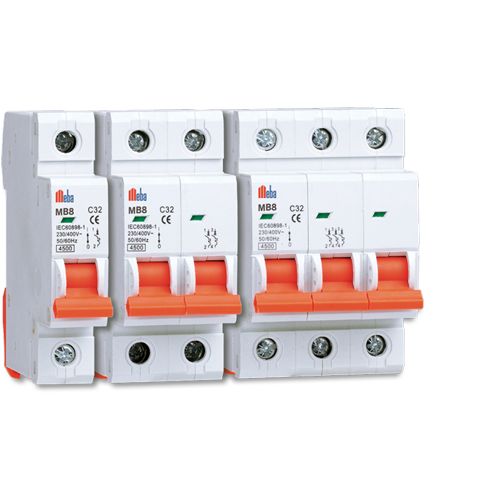
MCBs are small, low-capacity circuit breakers commonly used in residential and light commercial electrical installations. They protect circuits from overload and short circuit conditions.
MCBs are designed for lower current ratings and are typically used in distribution boards and control panels.
Key Features
Compact size
Automatic trip during overload
Easy installation and replacement
Suitable for low current applications
Common Applications
Lighting circuits
Small commercial buildings
Office power distribution panels
Examples
Example 1: An office building uses MCBs in distribution boards to protect lighting and small appliance circuits.
Example 2: Control panels in small industrial machines use MCBs for auxiliary power protection.
2. Molded Case Circuit Breaker (MCCB)
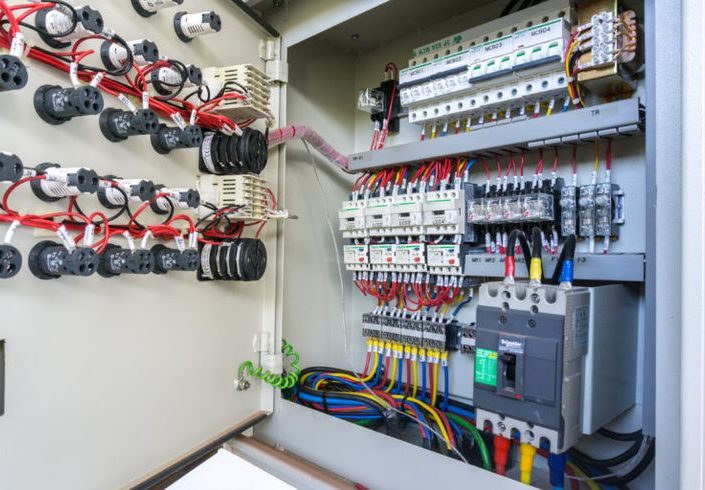
MCCBs are used in industrial and commercial facilities where higher current capacity and adjustable protection settings are required.
Compared to MCBs, MCCBs provide more advanced protection features and can handle larger electrical loads.
Key Features
Higher current rating than MCB
Adjustable trip settings
Protection against overload, short circuit, and ground faults
Suitable for heavy electrical loads
Common Applications
Industrial power distribution panels
Manufacturing plants
HVAC and motor protection systems
Examples
Example 1: A manufacturing plant uses MCCBs in main distribution panels to protect motors and heavy machinery.
Example 2: Commercial buildings install MCCBs to protect large electrical loads such as elevators and HVAC systems.
3. Air Circuit Breaker (ACB)
ACBs are designed for high-capacity electrical systems and are commonly used in main power distribution panels in industrial facilities.
They are capable of handling very high current ratings and are typically installed in low voltage switchgear assemblies.
Key Features
High current capacity
Advanced protection and monitoring features
Suitable for large electrical infrastructure
Reliable protection for critical systems
Common Applications
Main electrical distribution panels
Industrial power plants
Large infrastructure projects
Examples
Example 1: A data center installs ACBs in the main switchboard to protect its entire power distribution system.
Example 2: Large industrial facilities use ACBs in main panels to manage incoming power supply.
Factors to Consider When Choosing a Circuit Breaker
Selecting the right breaker requires evaluating several technical factors.
1. Current Rating
The breaker must match the electrical load of the circuit.
Examples:
Example 1: A lighting circuit may only require a 10A or 16A MCB.
Example 2: An industrial motor system may require a 250A MCCB.
2. Fault Breaking Capacity
The breaker must safely interrupt the maximum possible fault current.
Examples:
Example 1: Small commercial systems may require breakers rated for 6kA or 10kA.
Example 2: Industrial power distribution systems may require breakers rated for 50kA or more.
3. Application Type
The installation environment determines which breaker type should be used.
Examples:
Example 1: Residential and office circuits typically use MCBs.
Example 2: Industrial power distribution panels require MCCBs or ACBs.
Importance of Using Certified Electrical Equipment
Using certified circuit breakers from authorized manufacturers ensures safety, reliability, and compliance with international electrical standards.
Low-quality or non-certified breakers may fail to trip during electrical faults, increasing the risk of equipment damage and safety hazards.
Organizations should always source electrical protection devices from trusted suppliers who provide genuine, tested products.
Conclusion
Circuit breakers are critical components in electrical power systems, protecting equipment and ensuring safe operation. Choosing the correct breaker type depends on the electrical load, application, and system design.
MCBs are suitable for low power circuits, MCCBs are used in industrial distribution systems, and ACBs provide protection for large-scale electrical infrastructure.
By selecting the right circuit protection devices and working with reliable electrical suppliers, organizations can build safe and efficient power distribution systems.