

Industrial automation depends on accurate object detection to ensure machines operate safely, efficiently, and consistently. One of the most widely used sensing devices in modern manufacturing is the Autonics Proximity Sensor. These sensors detect objects without physical contact, making them ideal for high-speed industrial environments where reliability and durability are essential.
Whether you’re automating a production line or upgrading an existing control system, working with an experienced Autonics Proximity Sensor Supplier ensures you receive genuine products, technical guidance, and the right sensing solution for your application.
What Is an Autonics Proximity Sensor?
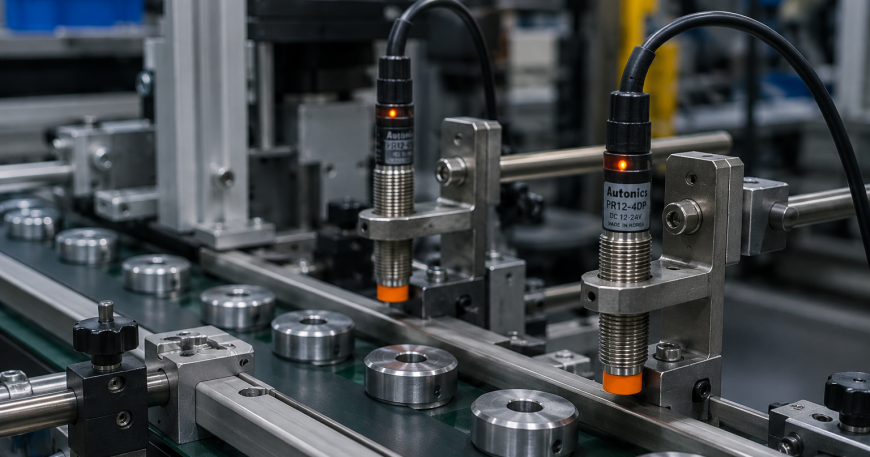
An Autonics Proximity Sensor is an electronic sensor designed to detect the presence or absence of an object without touching it. Unlike mechanical switches, proximity sensors use electromagnetic fields or other sensing technologies to identify nearby objects, reducing wear and extending equipment life.
These sensors are widely used in manufacturing plants, packaging machines, conveyor systems, and automated production lines where fast and accurate object detection is required.
Types of Autonics Proximity Sensors
Autonics offers a variety of proximity sensors designed to meet different industrial requirements. Selecting the right sensor depends on the material being detected, sensing distance, and operating environment.
Inductive Proximity Sensors
The Inductive Proximity Sensor is the most commonly used type in industrial automation. It detects metallic objects by generating an electromagnetic field and sensing changes when metal enters the detection range.
These sensors are ideal for:
- Metal object detection
- Machine automation
- Conveyor systems
- CNC machinery
- Automotive production
- Packaging equipment
Because they are contactless, inductive sensors offer excellent durability and long service life.
Capacitive Proximity Sensors
Capacitive sensors can detect both metallic and non-metallic materials, including plastic, glass, wood, powder, and liquids. They are commonly used in level detection and material handling applications.
Cylindrical and Rectangular Sensors
Autonics proximity sensors are available in multiple housing designs to accommodate different installation requirements.
Common options include:
- Cylindrical Sensors
- Rectangular Sensors
- Miniature Sensors
- Flush Mount Sensors
- Non-Flush Mount Sensors
These configurations allow easy integration into various industrial machines and automation systems.
Key Features of Autonics Proximity Sensors
Modern Industrial Proximity Sensors are designed to deliver reliable performance in demanding industrial environments.
Some of the key features include:
- Contactless Object Detection
- Fast Response Time
- High Detection Accuracy
- Long Service Life
- Compact Design
- LED Status Indicators
- Excellent Resistance to Dust and Vibration
- Stable Performance in Harsh Conditions
- Easy Installation
- Low Maintenance Requirements
These features help manufacturers improve machine reliability while reducing maintenance costs and downtime.
Applications of Industrial Proximity Sensors
Industrial Proximity Sensors are widely used across numerous industries where fast, accurate, and contactless object detection is essential for efficient automation. They play a critical role in manufacturing automation, conveyor systems, packaging machines, material handling equipment, food and beverage processing, pharmaceutical manufacturing, textile machinery, plastic injection molding, automotive assembly, and warehouse automation.
By continuously monitoring the position, movement, and presence of objects, proximity sensors enable machines to perform repetitive operations with exceptional precision and consistency. This not only improves production efficiency and product quality but also reduces manual intervention, minimizes machine downtime, and enhances overall operational reliability
Benefits of Automation Sensor Solutions
Modern Automation Sensor Solutions provide much more than simple object detection. They improve production efficiency by providing real-time information to PLCs, HMIs, and industrial control systems.
Key benefits include:
- Improved Production Accuracy
- Reduced Machine Downtime
- Faster Manufacturing Processes
- Lower Maintenance Costs
- Enhanced Equipment Safety
- Better Product Quality
- Increased Operational Efficiency
- Reliable Continuous Operation
These advantages make proximity sensors an essential component of every modern automation system.
Choosing the Right Autonics Proximity Sensor
Selecting the correct proximity sensor depends on several important factors.
Before choosing a sensor, consider:
- Type of object being detected
- Metal or non-metal material
- Required sensing distance
- Mounting location
- Operating temperature
- Environmental conditions
- Electrical output requirements
- PLC compatibility
An experienced Autonics Proximity Sensor Supplier can help evaluate these requirements and recommend the most suitable sensor for your automation project.
Why Work with an Autonics Sensor Dealer?
Purchasing from a trusted Autonics Sensor Dealer offers several advantages beyond simply buying a product.
Benefits include:
- Genuine Autonics Products
- Expert Product Selection
- Technical Consultation
- Application Engineering Support
- Fast Product Availability
- Competitive Pricing
- Reliable After-Sales Service
- Warranty Support
Working with an authorized dealer ensures your automation system performs reliably while minimizing installation challenges.
An Autonics Proximity Sensor is a critical component of today’s industrial automation systems. Its ability to detect objects without physical contact improves machine reliability, increases production efficiency, and reduces maintenance requirements. From Inductive