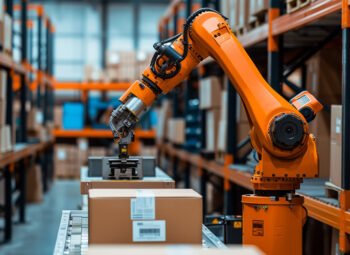


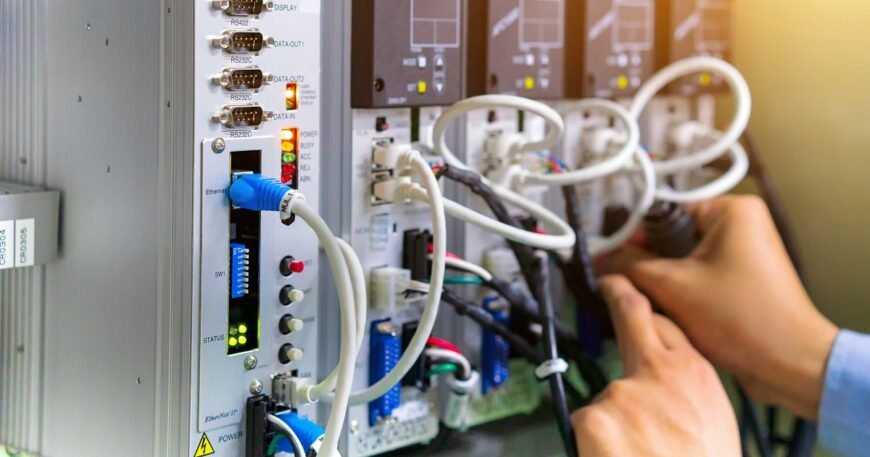
Programmable Logic Controllers (PLCs) are a key part of modern industrial automation. They help industries automate machines, control production processes, monitor equipment, and improve operational efficiency. With reliable and precise control, PLC automation allows businesses to reduce manual intervention and maintain consistent production performance.
What Is PLC Automation?
PLC automation uses programmable logic controllers to control industrial machines and processes automatically. A PLC receives signals from sensors and other devices, processes the information according to programmed instructions, and sends commands to connected equipment.
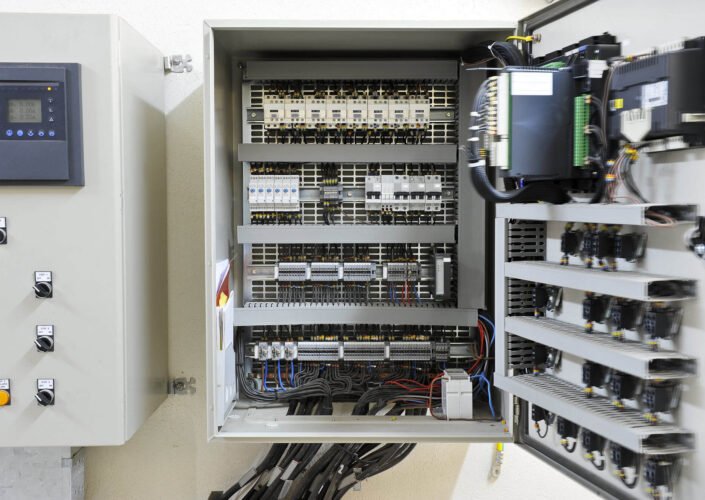
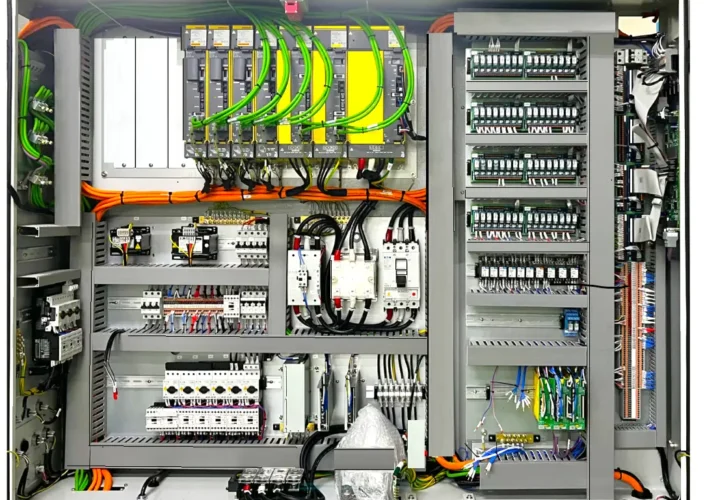
A typical PLC automation system may include:
- PLC controllers
- Industrial sensors
- HMIs
- Motors and actuators
- Variable Frequency Drives (VFDs)
- Control panels
- Industrial communication networks
How PLCs Improve Industrial Operations
PLCs help industries automate repetitive and complex operations with greater accuracy and consistency. They can control multiple machines and processes while continuously monitoring operating conditions.
Key advantages include:
- Improved production efficiency
- Reduced manual intervention
- Consistent process control
- Faster machine operation
- Reduced human error
- Improved equipment reliability
- Better production monitoring
PLCs and Process Control
One of the main benefits of PLC automation is precise process control. PLCs can monitor inputs such as temperature, pressure, level, speed, and position and respond according to programmed conditions.
For example, a PLC can automatically start or stop a motor, control a conveyor, adjust machine speed, or activate an alarm when a specific condition occurs.
This helps industries maintain stable and consistent production processes.
Real-Time Monitoring with PLC Systems
PLCs can work with Human Machine Interfaces (HMIs) and SCADA systems to provide real-time information about machines and production processes.
Operators can monitor:
- Machine status
- Production parameters
- Alarms and faults
- Motor conditions
- Process performance
Real-time monitoring helps operators identify issues quickly and take corrective action before they lead to major production interruptions.
PLC Automation and Reduced Downtime
Unexpected machine failures can affect productivity and increase operational costs. PLC-based automation systems can detect abnormal conditions and generate alarms when equipment or processes operate outside defined limits.
Early fault detection helps maintenance teams respond faster and reduce unnecessary downtime.
PLC Applications Across Industries
PLC automation is used in a wide range of industrial applications, including:
- Manufacturing
- Food and beverage
- Water and wastewater
- Packaging
- Pharmaceuticals
- Power and energy
- Material handling
- Process industries
PLCs can be customized to meet the control requirements of different machines and production environments.
Choosing the Right PLC Solution
Selecting the right PLC depends on factors such as the number of inputs and outputs, process complexity, communication requirements, expansion needs, and operating environment.
A properly designed PLC automation system should also be easy to monitor, maintain, troubleshoot, and expand as production requirements change.
Working with an authorized dealer ensures your automation system performs reliably while minimizing installation challenges.
An Autonics Proximity Sensor is a critical component of today’s industrial automation systems. Its ability to detect objects without physical contact improves machine reliability, increases production efficiency, and reduces maintenance requirements. From Inductive