

Industrial automation is rapidly changing the way modern manufacturing industries operate. From automated production lines to intelligent control systems, advanced automation technologies help manufacturers improve productivity, accuracy, safety, and operational efficiency. As industries move toward smarter and more connected manufacturing environments, industrial automation has become an essential part of modern production.
Whether you are upgrading an existing manufacturing facility or developing a new automated production line, choosing the right industrial automation solutions can help reduce downtime, improve product quality, and achieve consistent production performance.
What Is Industrial Automation?
Industrial automation is the use of control systems, machinery, sensors, software, and communication technologies to perform manufacturing processes with minimal manual intervention. Automation systems allow machines to monitor operations, make programmed decisions, and perform repetitive tasks accurately and consistently.
Modern industrial automation commonly includes:
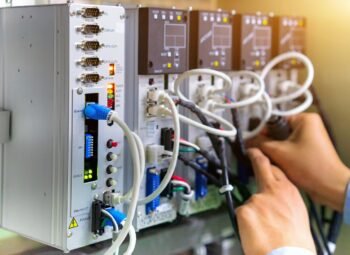
- Programmable Logic Controllers (PLCs)
- Human Machine Interfaces (HMIs)
- Supervisory Control and Data Acquisition (SCADA)
- Industrial sensors
- Variable Frequency Drives (VFDs)
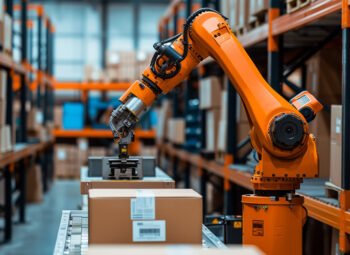
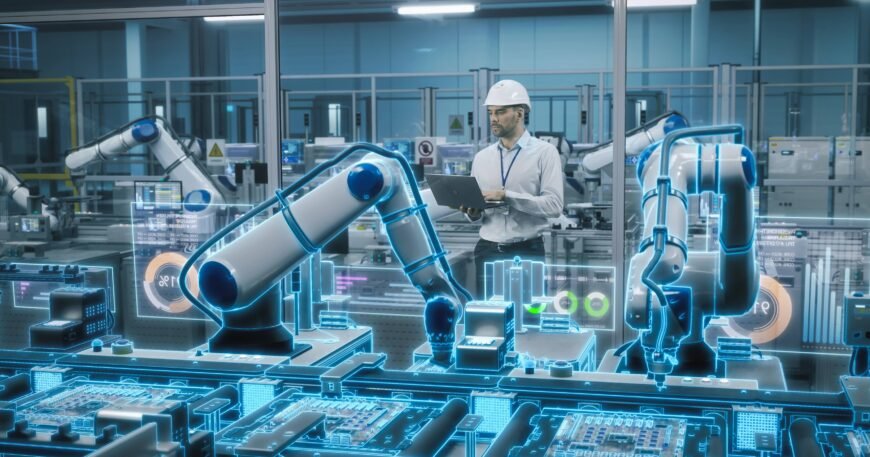
- Industrial robots
- Control panels
- Industrial communication systems
These technologies work together to create reliable and efficient manufacturing processes.
How Industrial Automation Is Transforming Manufacturing
Manufacturing industries are increasingly adopting automation to improve production performance and respond to growing demands for speed, quality, and efficiency.
Automated Production Processes
Automation enables machines to perform repetitive manufacturing operations with high accuracy and consistency. Automated production lines can operate continuously while reducing the need for manual intervention.
This helps manufacturers achieve:
- Faster production cycles
- Consistent product quality
- Reduced human error
- Improved production capacity
- Better process control
Improved Productivity and Efficiency
Industrial automation allows machines and production systems to operate efficiently with optimized processes. Automated systems can monitor production activities in real time and identify potential problems before they affect the entire operation.
By improving machine utilization and reducing unnecessary delays, manufacturers can increase overall productivity.
Real-Time Monitoring and Control
Modern automation systems provide real-time information about machines, production processes, and equipment performance. PLCs, HMIs, and SCADA systems allow operators to monitor important parameters and control industrial processes from centralized interfaces.
Real-time monitoring helps manufacturers:
- Identify equipment problems quickly
- Monitor production performance
- Track machine conditions
- Reduce unexpected downtime
- Improve operational decision-making
Key Technologies Driving Industrial Automation in 2026
Several technologies are contributing to the rapid development of modern manufacturing automation.
PLC Automation
Programmable Logic Controllers are at the heart of many industrial automation systems. PLCs control machines and production processes based on programmed logic, allowing manufacturers to automate complex operations with reliable and precise control.
Industrial Sensors
Sensors detect changes in position, temperature, pressure, proximity, level, and other process conditions. The information collected by sensors allows automation systems to respond quickly and maintain accurate production processes.
SCADA Systems
SCADA systems provide centralized monitoring and control of industrial processes. They help operators collect real-time data, monitor equipment performance, and identify abnormal operating conditions.
Industrial Robotics
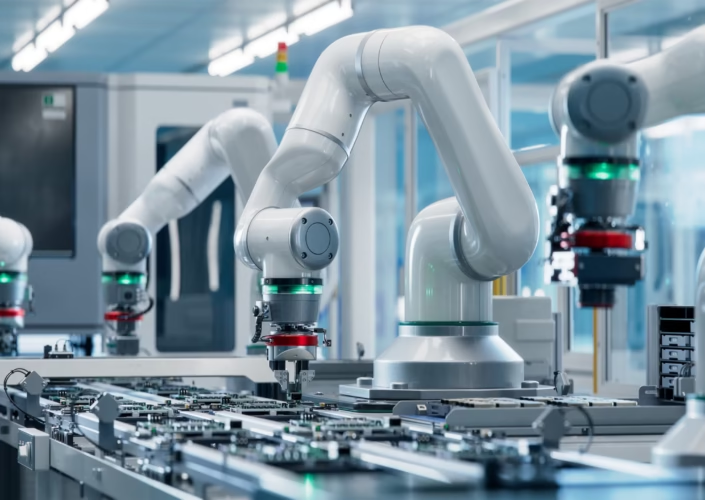
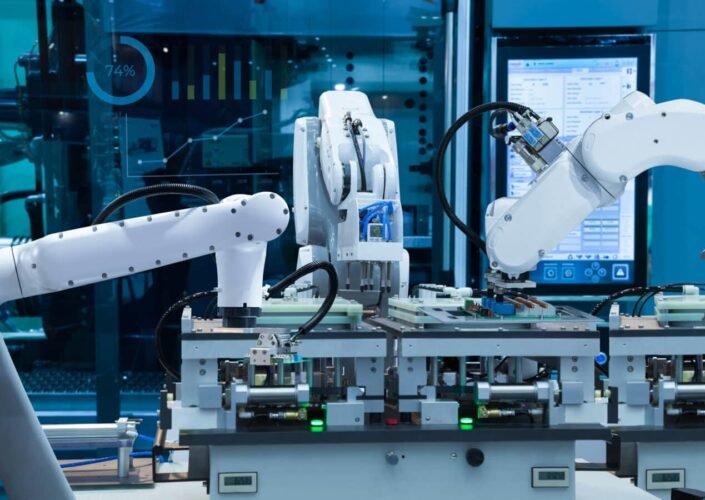
Robotic systems are increasingly being used for repetitive, high-speed, and precision-based manufacturing operations. Robots can perform tasks such as assembly, material handling, welding, packaging, and inspection.
IoT and Connected Manufacturing
Industrial IoT technology connects machines, sensors, and control systems to enable continuous data collection and communication. Connected manufacturing environments allow businesses to analyze equipment performance and improve production processes using real-time information.
Benefits of Industrial Automation for Manufacturers
Implementing the right automation solutions can provide significant operational advantages.
Key benefits include:
- Increased production efficiency
- Reduced machine downtime
- Improved product quality
- Higher production accuracy
- Reduced operating costs
- Improved workplace safety
- Faster production processes
- Better equipment monitoring
- Reduced manual errors
- Improved resource utilization
These advantages make industrial automation an important investment for manufacturers looking to improve long-term operational performance.
Industrial Automation and Predictive Maintenance
One of the major developments in modern manufacturing is the use of automation data for predictive maintenance. Sensors and connected control systems can continuously monitor equipment conditions and identify unusual changes in machine performance.
Predictive maintenance helps manufacturers detect potential equipment problems before major failures occur. This can reduce unexpected downtime, extend equipment life, and lower maintenance costs.
Role of AI in Industrial Automation
Artificial Intelligence is becoming an important part of the next generation of industrial automation. AI-powered systems can analyze large amounts of production data and identify patterns that may not be easily detected through traditional monitoring methods.
AI can support:
- Predictive maintenance
- Quality inspection
- Production optimization
- Energy management
- Automated decision-making
- Process performance analysis
The combination of AI, industrial IoT, sensors, and automation systems is helping manufacturers move toward smarter and more responsive production environments.
How Automation Improves Workplace Safety
Industrial automation can also improve workplace safety by allowing machines to perform hazardous, repetitive, or physically demanding tasks. Automated systems can reduce direct human exposure to dangerous machinery, high temperatures, chemicals, and other industrial risks.
Safety sensors, emergency systems, machine monitoring, and automated controls further help create safer manufacturing environments.
Choosing the Right Industrial Automation Solution
Selecting the right automation solution depends on the specific requirements of each manufacturing operation.
Before implementing an automation system, manufacturers should consider:
- Production requirements
- Machine compatibility
- Process complexity
- Required level of automation
- System scalability
- Communication requirements
- Safety requirements
- Maintenance needs
- Integration with existing equipment
- Future expansion plans
Working with an experienced industrial automation solutions provider can help businesses select suitable products, develop effective control strategies, and achieve reliable system integration.