

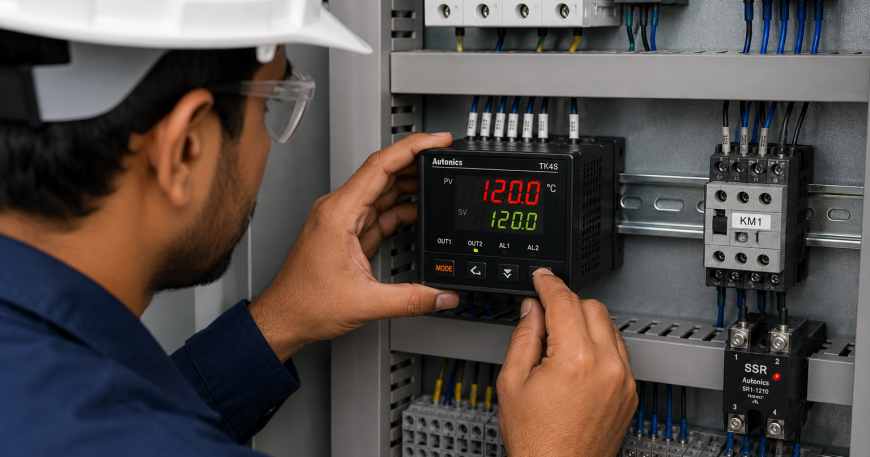
Maintaining precise temperature is critical in modern industrial processes. From plastic molding and food processing to pharmaceutical manufacturing and packaging, accurate temperature control helps improve product quality, reduce waste, and increase operational efficiency. Choosing the right controller can make a significant difference, which is why many businesses work with an experienced Autonics Temperature Controller Supplier to identify the best solution for their specific application.
With several models and features available, selecting the right controller requires understanding your process requirements, operating environment, and automation goals.
Understand Your Application Requirements
The first step in selecting an Industrial Temperature Controller is understanding how it will be used. Every industry has different temperature control needs based on the equipment, heating method, and process sensitivity.
Consider factors such as:
- Required temperature range
- Heating or cooling application
- Type of process (continuous or batch)
- Desired temperature accuracy
- Response time
- Environmental conditions
Clearly defining these requirements helps narrow down the most suitable controller for your operation.
Choose Between ON/OFF and PID Control
One of the most important decisions is selecting the control method.
A standard ON/OFF controller switches the heating element completely on or off once the set temperature is reached. While this method is simple and cost-effective, it may cause temperature fluctuations.
A PID Temperature Controller continuously adjusts the output based on proportional, integral, and derivative calculations. Instead of simply switching on and off, it maintains a much more stable temperature by minimizing overshoot and fluctuations.
PID controllers are ideal for applications requiring:
- High temperature accuracy
- Stable process control
- Reduced product variation
- Energy-efficient operation
- Faster system response
For precision manufacturing, a PID controller is often the preferred choice.

Select the Right Digital Temperature Controller
A modern Digital Temperature Controller provides greater accuracy, easier programming, and improved monitoring compared to traditional analog controllers.
Features to look for include:
- Large digital display
- Auto-tuning capability
- Multiple sensor compatibility
- Alarm functions
- High accuracy measurement
- Easy parameter settings
- Communication interfaces
- Compact installation
Digital controllers simplify operation while providing operators with real-time process information.
Consider Sensor Compatibility
Different industrial applications use different temperature sensors. Before purchasing a controller, verify that it supports the sensor used in your process.
Common sensor types include:
- Thermocouples
- RTD (Resistance Temperature Detector)
- PT100 Sensors
- J-Type Thermocouples
- K-Type Thermocouples
An experienced Autonics Temperature Controller Supplier can help ensure compatibility between the controller and sensor for optimal performance.
Evaluate Installation Requirements
Industrial environments often have limited panel space and specific installation requirements.
When choosing an Industrial Temperature Controller, consider:
- Panel cut-out dimensions
- DIN standard mounting
- Power supply requirements
- Wiring simplicity
- Display visibility
- Operating temperature
- Protection against dust and moisture
Selecting a controller that fits your control panel reduces installation time and future maintenance.
Look for Communication Features
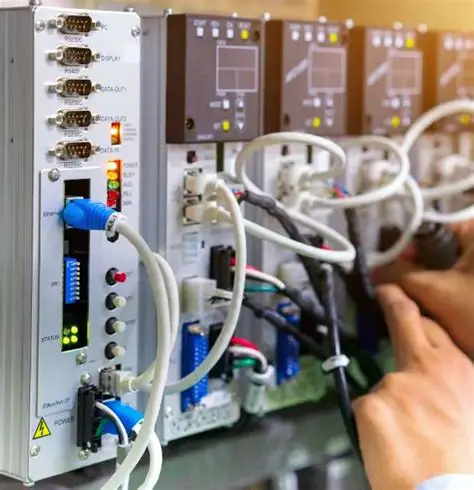
Many modern automation systems require controllers to communicate with PLCs, HMIs, and SCADA software.
Advanced Temperature Control Solutions may include communication protocols such as:
- RS-485
- Modbus RTU
- Ethernet
- Industrial fieldbus networks
These features enable centralized monitoring, remote diagnostics, and improved production management.
Think About Future Expansion
Automation requirements often grow over time. Choosing a controller that supports additional communication options or system integration can help avoid costly upgrades in the future.
Scalable Temperature Control Solutions allow manufacturers to expand production while maintaining consistent temperature control across multiple machines and processes.
Work with a Trusted Supplier
Selecting the right equipment is only part of the process. Working with an experienced Autonics Temperature Controller Supplier provides valuable advantages, including:
- Genuine Autonics products
- Technical consultation
- Product selection guidance
- Installation support
- Competitive pricing
- Fast product availability
- After-sales service
Professional guidance helps ensure the controller matches your application and delivers reliable long-term performance.
Choosing the right Digital Temperature Controller is essential for maintaining product quality, improving efficiency, and reducing operational costs. By evaluating your process requirements, selecting the appropriate PID Temperature Controller, ensuring sensor compatibility, and planning for future expansion, you can build a reliable and efficient automation system.
Whether you’re upgrading an existing production line or designing a new automation project, investing in high-quality Industrial Temperature Controller systems is a smart long-term decision. Partnering with a trusted Autonics Temperature Controller Supplier ensures access to dependable products, expert technical support, and advanced Temperature Control Solutions that keep your operations running smoothly.